Research Snapshot: The value of middle managers in the EUI
Sensemaking in the framework of the European Universities Initiative: The crucial role of middle managers.
Publication date: 05 February 2026
This research explores the internationalisation of higher education through the lens of sensemaking and critical sensemaking, focusing on the role of middle managers in European University alliances. Framed within the European Universities Initiative as an ongoing organisational change process, the study examines how governance reforms, transnational collaboration and shifting institutional expectations are interpreted and enacted within organisations. Particular attention is given to internal stakeholder engagement and to the ways middle managers mediate between strategic ambitions and everyday practices. By analysing how meanings are built, negotiated and sometimes contested, the research highlights the human and relational dimensions of European alliances. It contributes to a nuanced understanding of European higher education governance by foregrounding the micro-level dynamics that shape organisational adaptation, cooperation and transformation in the context of deepening international integration.
European alliances don’t transform universities on paper; they transform them through people. My research reveals how middle managers (and administrative staff) shape Europe’s higher education from within.
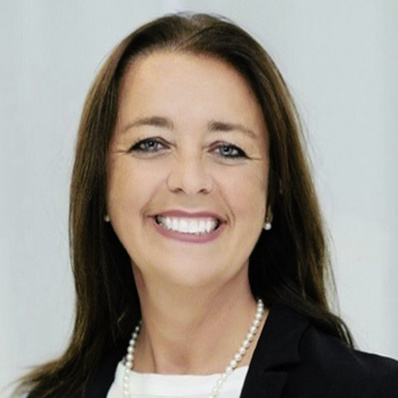
Agata Mannino
Agata Mannino currently serves as Coordinator of the Across European University Alliance, leading cross-institutional collaboration and strategy. Previously, she worked at the University of Padova as Manager for International Educational Projects, and at the University of Trieste as IRO for international agreements and networks. Agata holds a PhD from the Centre for Higher Education Internationalization (CHEI) of the Universita´ Cattolica del Sacro Cuore in Milan, focusing on sensemaking in internationalisation of HE within the EUI, where she explored the crucial role of middle managers in fostering staff engagement. Before that she obtained her Master´s in Translation and Interpretation from the University of Trieste, a Vocational Master’s in Public Communication fro IULM University in Milan and a Teaching License for German as a second Language from the University of Udine.
Key findings of the research:
This research highlights the pivotal role of middle managers as mediators and change agents within the EUI. Positioned between strategic leadership and operational staff, they translate political ambitions and alliance objectives into institutional practice. Their work is not merely administrative; it is interpretative and relational. Through tailored communication approaches and active stakeholder engagement, middle managers support alignment, manage tensions and create spaces for participation across diverse institutional cultures.
The study shows that organisational changes triggered by the EUI are deeply shaped by institutional context. Governance styles, organizational types and existing structures influence how alliances are understood and enacted locally. Successful transformation therefore depends less on formal structures alone and more on how meaning is built and shared.
Key takeaways include the need to invest in professional development for middle managers, recognise sensemaking as a strategic capability, increase early and inclusive stakeholder engagement and move beyond top-down communication models towards dialogical, participatory approaches to change.