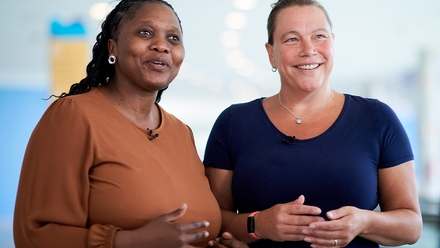
Mentorship
Build skills at every career stage
The programme is intentionally designed for everyone. For early-career professionals looking for guidance, mid‑career colleagues taking on new projects and senior experts seeking fresh insights or a reflective space to hone their leadership skills. Wherever you are in your journey, mentorship helps you move forward. And because mentorship is included with your EAIE membership, you can return year after year to keep learning from new partners and growing your network.
4 reasons why you should participate
The EAIE Mentorship Programme is a flexible, member‑exclusive benefit that supports you at every stage of your professional development. Built on a mutual learning model, it connects you with peers who can offer new perspectives, leadership insights and real‑world experience, all while letting you meet when and how it suits you, with no pre-set schedule.

Expand and enhance your skills
As your role and responsibilities evolve, your mentorship experience evolves with you.

Grow and advance your career
Whether you’re new or experienced, mentorship supports your development and helps you take the next step.

Make meaningful connections
Expand your international network and build relationships that support your career growth.

Boost your confidence
Gain confidence through regular feedback, encouragement and achievable goals.

It helped me think about the tools and skills I need to develop that would help me in the future.

I learnt so much from both of my wonderful mentees and it helped me reflect on why I do things a certain way.

We discussed so many important issues and learnt from each other. I had little ‘aha’ moments during the meetings.
Frequently asked questions
If you haven't found the answer to your question, please contact the EAIE Office.
How does the programme work?
The programme is a self-guided mentoring initiative that lasts around nine months. After applying to become a mentor or mentee, we will do our best to match you with someone who has a similar role and interests. We strive to match participants in the same time zone but from different countries, offering both participants the opportunity to gain insights into how other locations and organisations operate. When you are matched, you will be invited to a virtual kickoff meeting in April. After that, it is up to the mentorship partnership to find a meeting schedule that works best for them. The programme concludes with an end-of-year wrap-up meeting to reflect on the progress you’ve made together.
How often do mentors and mentees meet?
Since the programme is self-guided, the time commitment varies. Mentorship pairs can decide on a schedule that works for them. Most pairs typically meet online once a month, and if both are attending the conference, they may meet in person there at our mentorship session. While in-person meetings are not required, many participants often find ways to connect face-to-face at some point.
What is expected of mentors?
Mentors should have five years of experience in international higher education and be able to dedicate 1–2 hours per month. You don’t need to be an expert in any area; what matters most is that you are willing to share your knowledge and experiences. Mentors may need to provide feedback, guidance and support to their mentee during challenging times. What we hear most is that mentors gain as much from the experience as their mentees do – it’s an opportunity for self-reflection and to learn how other organisations address similar challenges. Plus, it feels good to help someone and see them succeed.
What is expected of mentees?
To get the most out of the programme, set clear goals about what you want to learn and achieve, and share these objectives with your mentor. Be open to learning and feedback. Mentees are also expected to take the lead in the relationship by scheduling meetings and sharing questions or discussion points a day or two in advance. This gives your mentor time to prepare to provide you with the best learning experience.
Can I participate in the programme more than once?
Yes, you’re welcome to participate as a mentor or mentee as often as you like. If you’ve previously been a mentee but want to continue to expand your knowledge, have recently changed roles, or are eager to build another supportive connection, you’re encouraged to join again.
We’ve even had instances where someone participated as both a mentor and a mentee in the same year. In this instance, they had extensive experience in international higher education, but were embarking on a new project and wanted guidance from someone with more experience in that particular area.
What if my mentor or mentee doesn’t respond?
In rare cases, a mentor or mentee’s role or commitments may change, making it difficult for them to continue. If this happens, please get in touch with us so we can explore finding a new match for you.