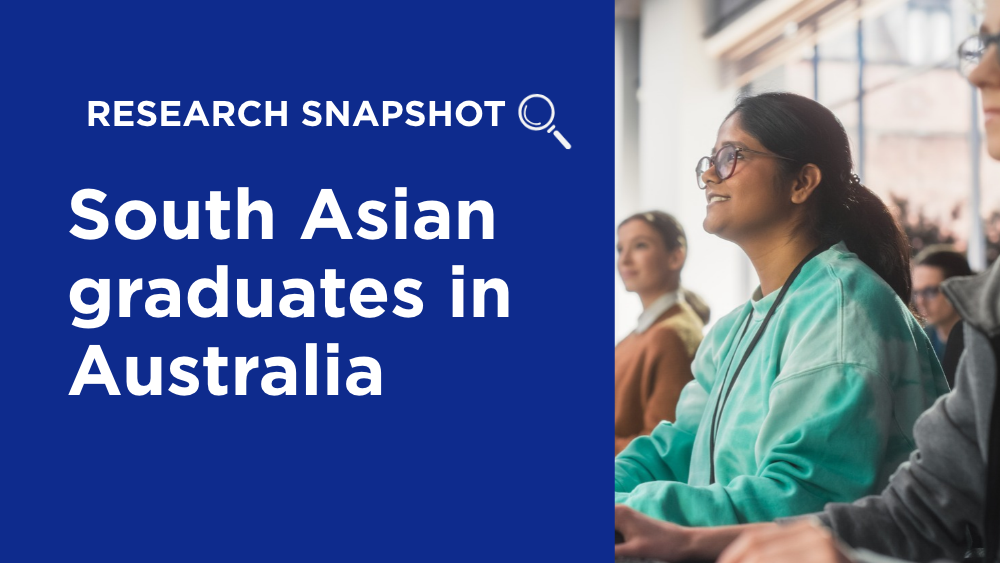
Research Snapshot: South Asian graduates in Australia
Impact of COVID-19 on South Asian graduates’ employment experiences in Australia: a qualitative study
Publication date: 12 March 2025
Dr Singh led this research project, conducting in-depth semi-structured interviews with 20 South Asian graduates who completed postgraduate studies in Australia. While previous research has examined the employability challenges faced by international students and graduates from South Asia, this study is the first to explore the extent to which the COVID-19 pandemic affected South Asian graduates’ employment experiences in Australia. The findings highlight factors influencing employment outcomes and offer insights for higher education institutions seeking to better prepare international students for a competitive labour market. The research underscores the value of internships, placements, volunteering, work-integrated learning and industry mentoring programmes, and highlights the importance of university–industry partnerships in enhancing graduates’ employability and career prospects.
This research highlights the resilience of South Asian graduates as they navigated employment challenges and opportunities in Australia during the COVID-19 pandemic.

Jasvir Kaur Nachatar Singh
Dr Jasvir Kaur Nachatar Singh is a multi-award-winning Associate Professor in the Department of Management and Marketing at La Trobe Business School, La Trobe University, Australia. Dr Singh is uniquely positioned as an interdisciplinary researcher, specialising in employability and careers, and the internationalisation of higher education management.
Key findings of the research:
The study identified both positive and negative impacts of COVID-19 on the employment experiences of South Asian graduates in Australia. Some participants secured jobs related to their qualifications, providing greater employment stability and career progression. Others faced significant challenges, including difficulty finding graduate-level roles, limited networking opportunities and the non-renewal of employment contracts.
A key finding was the disruption of face-to-face networking during lockdowns. Strong professional networks are widely recognised as critical for accessing and sustaining employment opportunities. Although participants adapted by using Zoom, LinkedIn and other online platforms, many felt these channels were less effective for building meaningful professional relationships than in-person interactions.
The findings suggest that higher education institutions can play a vital role in supporting international students and graduates through industry partnerships, work-integrated learning opportunities, mentoring programmes and targeted employability support. Helping students develop professional networks and gain relevant local work experience can strengthen employment outcomes and long-term career development.