Speakers

Ellen Wang

Arnim Heinemann

Anna A. Moritz
Paulina Latorre
Session
✅ Included for all participants
💬 Debate session (conversational)
💡 Relevant to all
Artificial intelligence is reshaping higher education at an unprecedented pace. From personalised learning and student support to research, assessment and institutional operations, AI offers exciting possibilities for innovation and transformation. Yet, as institutions race to embrace these technologies, a critical question remains: Who stands to benefit, and who may be left behind?
This year’s EAIE Debate invites participants to explore one of the most pressing challenges facing international higher education: Equity in the age of AI. Bringing together voices from across the sector, our debaters will tackle the motion: "AI will widen the digital divide in higher education." Will AI become a powerful force for democratising access, enhancing learning and creating new opportunities worldwide? Or will unequal access to technology, infrastructure, resources and digital skills deepen existing disparities between institutions, countries and learners?
Expect a lively, thought-provoking exchange as speakers argue passionately for and against the motion, challenge conventional thinking, and examine the far-reaching implications for the future of global higher education. As always, the audience is at the heart of the debate—listen, question, engage, and ultimately decide which side has made the most compelling case.
The floor is open. The arguments are ready. The verdict is yours.
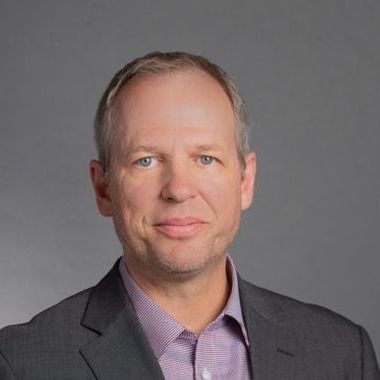
Arnim Heinemann holds a PhD in Middle Eastern Studies and Comparative Literature. During his academic career, his time in the German diplomatic service and several senior executive positions in academic and HE management, he gained expertise in science diplomacy, strategic internationalisation and HE leadership with a focus on global research networks and the responsible development of sustainable HE collaboration worldwide. He oversees the University of Bayreuth’s global engagement with offices in Africa, Australia, Asia, the Americas, and Europe. He is the president of SGroup – Universities in Europe, as well as a member of the steering group of the German chapter of Scholars at Risk and a member of EAIE’s publication committee.
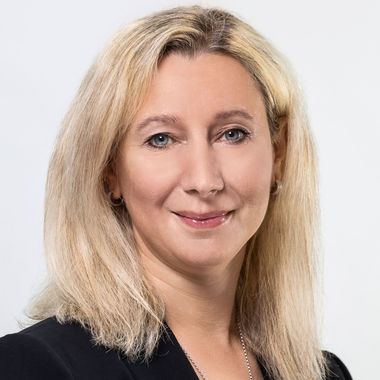
Anna is a THWS alumna who now leads the Digital Transformation and Transformation teams — covering digitalization, sustainability, and diversity — at the International Office of the Technical University of Applied Sciences Würzburg-Schweinfurt.
Since 2025, she has also served as IT Coordinator for the UNINOVIS University Alliance, driving digital interoperability in international higher education collaboration and mobility. Previously, she led THWS's digital transformation of international activities and headed the 'Internationalization 2.0' project from 2020 to 2023.
Since 2021, Anna has acted as Erasmus+ Digital Expert for the German National Agency for Higher Education, NA DAAD, advancing European digital mobility infrastructures.
Before moving into higher education, she spent many years in the private sector — first as an entrepreneur, then in business development — experience that continues to shape her pragmatic, strategy-driven approach.
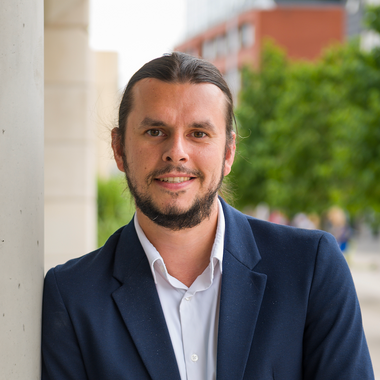
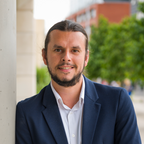
Cato Rolea is a UK-based digital-transformation strategist with 10 years’ experience delivering AI-driven solutions for government, higher education and commerce. He leads AI for Global Education (AFGE), a charity advancing ethical AI literacy worldwide. As Assistant Director for Digital Transformation at ECCTIS, he has led technology, automation and AI initiatives supporting the UK Home Office and Department for Education. He also founded UniGlobal Technologies, creators of the first AI-powered Career Toolkit for international education professionals. A globally in-demand keynote speaker, Cato advises policymakers and executives on responsible AI adoption and measurable impact.