Session
✅ Included for all participants
Short-term summer programmes are vulnerable to financial risks, sudden visa restrictions, political shifts, mismatched expectations, health crises, travel disruptions and much more. This session will explore strategies to anticipate and manage uncertainty through market diversification, presenting case studies of cancellations and format adaptations. You will gain tools for risk assessment, crisis communication and flexible programme design to keep initiatives resilient and sustainable.
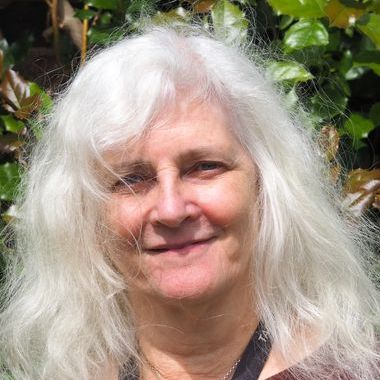
Kristiina Oelsner is a project manager for international short-term programmes at Bauhaus-Universität Weimar. She holds a Bachelor’s degree in Adult Education from Tallinn University, Estonia, and a Master’s degree in International Business and Economics from Schmalkalden University of Applied Sciences, Germany.
With more than 15 years of experience in international education, Kristiina has worked in a variety of roles involving programme development, international cooperation, recruitment, marketing, and the organisation of educational programmes.
In 2026, she published her first novel, Minu (Ida-) Saksamaa ("My (East) Germany"), in Estonia. The book combines personal memories with historical context.

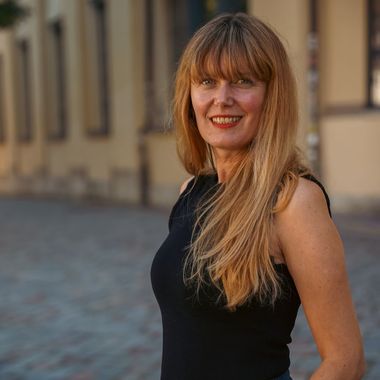
Anna Kuznetsova is the Project Manager of Tallinn Summer and Winter School at Tallinn University, where she coordinates international short-term academic programmes and works with students, lecturers, and partner universities worldwide. Her professional expertise includes international higher education, project management, intercultural communication, and the development of academic and institutional partnerships.
Alongside her work in international education, Anna is a PhD researcher specialising in Indigenous and Finno-Ugric Studies. Her research focuses on ethnopolitical institutions, minority and Indigenous communities, and the preservation and development of Finno-Ugric languages and cultures. She also teaches Russian language and courses on Finno-Ugric history, cultures, and contemporary issues.
Anna has extensive experience in managing educational and cultural projects. Over the course of her career, she has been involved in a range of initiatives promoting international academic cooperation and Finno-Ugric cultures. Her professional experience brings together higher education, research, teaching, and project coordination, with a strong emphasis on international collaboration and cross-cultural exchange.